
OK! So you want to be proficient? Great! So do I!
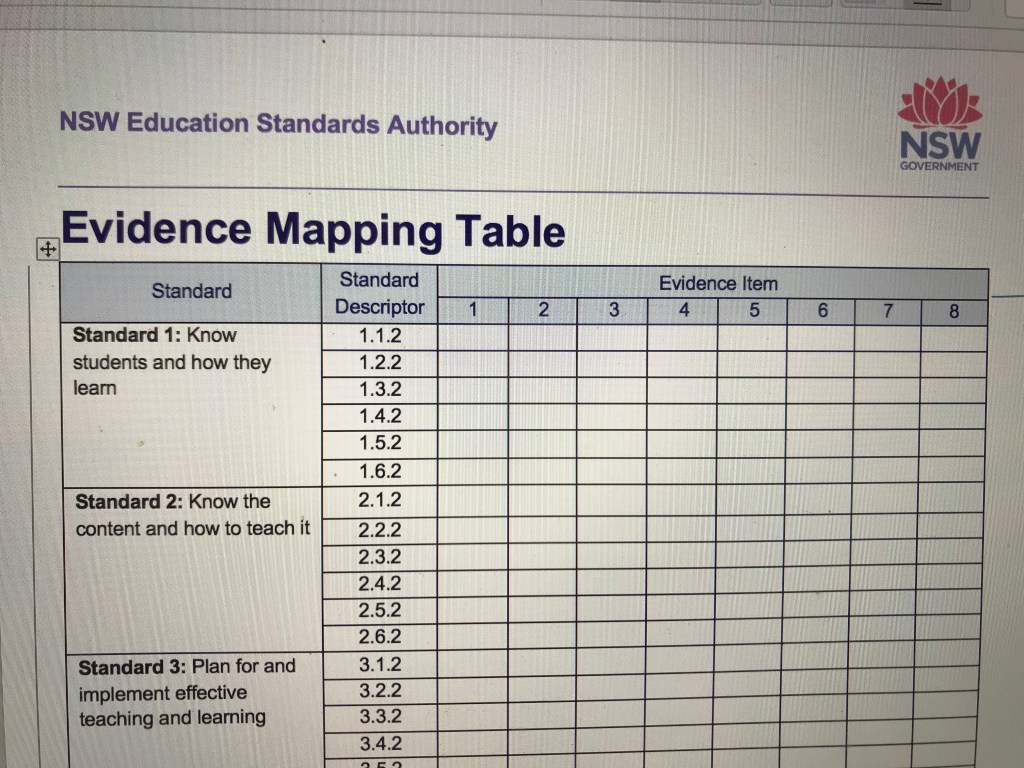
The first thing I did was look through the Proficient Teacher Evidence Guide for Early Childhood Teachers – Print it out. Basically you have to show evidence of your work that cover all 7 Standards and between 2-4 descriptors for each standard. One piece of annotation can cover multiple standards so we are looking at roughly 5-8 pieces of annotations backed up with examples (evidence). I did 6 annotations. You do not have to cover each descriptor, but do try and aim for each standard. I also used an evidence mapping guideline to help me see the bigger picture.
The max your whole document can be at the time of submission is 20 to 35 pages, please ensure each annotation is 500 words or less (Just one side of the A4 page). Anything over and you are over explaining it, be very specific.
Before you begin, look through your previous planning for what can be used as evidence. You need to be able to explain in the annotations the context behind this evidence (Who, what, why, where, when, how); basically you need to write in a way that anyone (not just the assessors) can read and understand the context – STRICTLY NO NAMES, NO FACES of the children. Then go on to explain how you meet the requirement of each descriptor in a few lines per descriptor. Try and use the language used in the descriptor in your annotations and give specific examples of strategies used and learning that took place. I wrote a short paragraph for the context and for each descriptor.
| Standards | What it’s about | Descriptors to choose from |
| Standard 1 | Know students and how they learn | 6 |
| Standard 2 | Know content and how to teach it | 6 |
| Standard 3 | Plan for and implement effective teaching and learning | 7 |
| Standard 4 | Create and maintain supportive and safe learning environments | 5 |
| Standard 5 | Assess, provide feedback and report on student learning | 5 |
| Standard 6 | Engage in professional learning | 4 |
| Standard 7 | Engage professionally with colleagues, parents/ carers and the community | 4 |
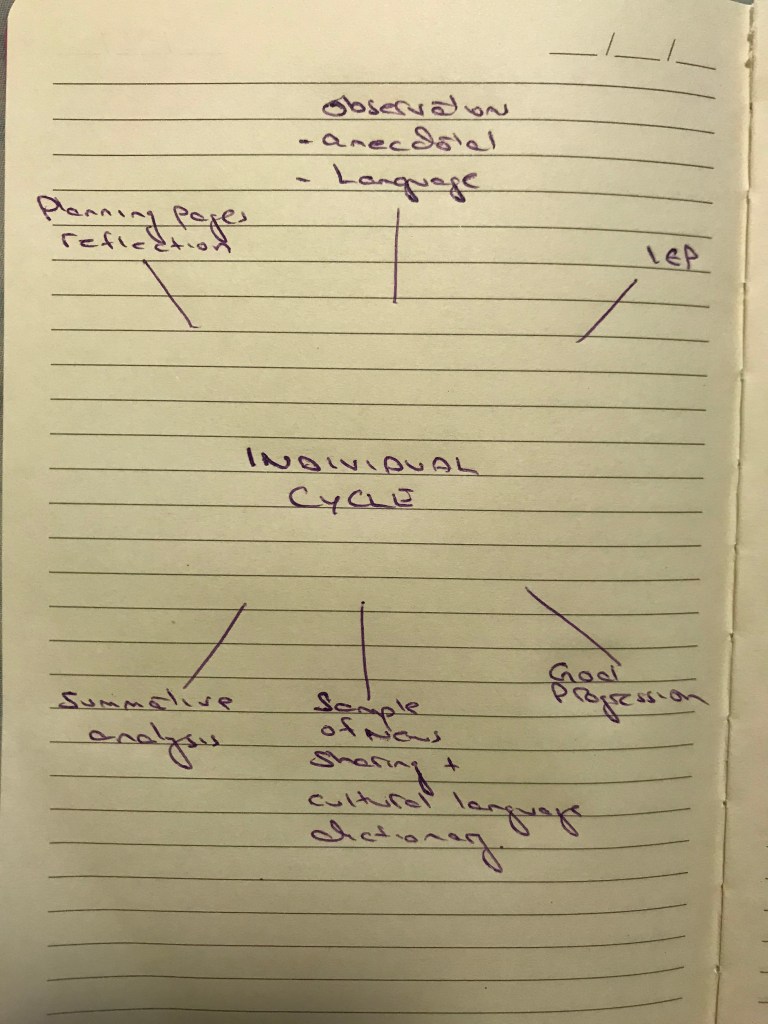
I saw many samples of annotations and everyone had a different way of going about it. Some wrote about a specific experience done with a specific child. I did one Individual cycle, one group cycle and then a few other topics relating to my preschool room. It can be how you supported a child with his fine motors through cutting experiences, or how you addressed cultural inclusion at your centre/ room, it could be behaviour related, project related anything you have done that you are proud of, that contributed to individual and group learning, family contributions and communication and collaboration, professional development, collegial discussions. The problem this presented for me was that there were so many to choose from I couldn’t decide which ones to go with, and when I did decide the topics of my annotations, I couldn’t decide which evidence to include. Make a mind map for each annotation, it helped me sort out the evidence I needed. I also used the app ‘Photogrid’ to make collages of pictures I used as evidence to save space.
The templates for your annotations and the final observation can be found at educationstandards.nsw.edu.au, if you can’t find them please get in touch. I shared the evidence with my supervisor on google docs, as it can become quite a large document. Once she was happy with my annotations and related evidence I compiled them all onto a word document, converted to PDF and then compressed it using a free PDF compression tool online.
I am now in the process of writing my final experience that will be observed by my supervisor in practice. Following this she will give me feedback, write my report, and we will be ready to submit.
The whole process took me from December to Feb (sorting through evidence). I sorted the evidence into the 6 annotations on Google doc and decided on titles – this took ME about two months because of my busy schedule. Then I took a week off work (annual leave) to be able to fully concentrate on writing the annotations. Once my supervisor was happy with the annotations (She was wonderfully critical gave me lots to reflect on), I began the process of elimination to keep my evidence very specific, and also to meet the page count (33 pages for me). I know people have done the whole thing in a week. I wasn’t one of them. I procrastinated like you won’t believe, hey I have three kids and zero brain space when I get home! I’m just happy it’s finally almost over!
Best of luck!! And let me know if I can answer any questions.
Note 1: I collected evidence first and then wrote the annotations. People also write annotations first and then collect the evidence.
Note 2: With the latter, some experiences you may have to plan with specific standards and descriptors in mind. I didn’t do this, but it would have been helpful if I knew to do this earlier, because then you have a clear plan rather than working out how your previous work meets the standards. Luckily we follow a beautiful planning cycle which is very goal oriented so I was able make the links easily.
~ Ru

 The Roo that could